TRAVELER STORY · 대전
Written by AI from Korea Tourism Organization travel-course data. It is not a real visitor’s review, so check hours and travel times before you go.
A family-minded journey through Chungcheongbuk-do and Daejeon, where temple stillness, hands-on science, and questions of heritage unfold under the night sky.
In central Korea, one day moved from pine-scented temple calm to telescope glass and starlight, and somehow made ancestry, science, and wonder feel like part of the same journey.
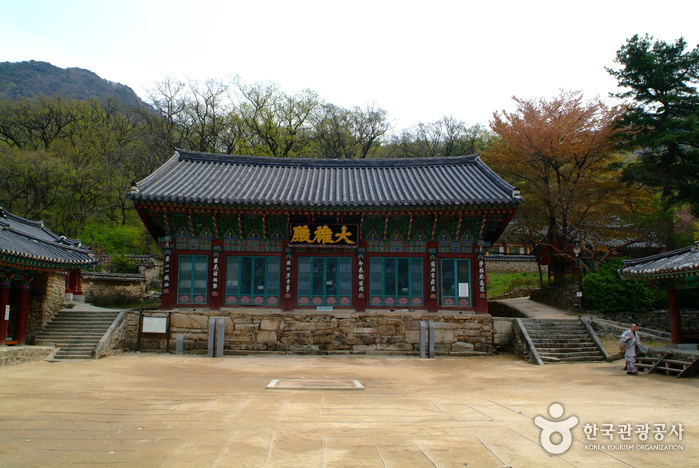
The air changed first. City edges gave way to wooded slopes, and the road into Chungcheongbuk-do carried that clean, resinous scent of pine that always seems to slow the pulse. I came for the stars, but the day began somewhere quieter: in the atmosphere of a mountain temple, where stone paths, old timber, and the hush between bells made everything feel more deliberate.
What stayed with me was not a single monument, but the rhythm of the place. The temple setting seemed to peel away noise I had not realized I was carrying. For international travelers, this kind of Korean mountain temple experience is less about spectacle than about mood: a deep respect for landscape, patience, and reflection. By the time I left, the coming night felt less like entertainment and more like a continuation.
The metallic click of telescope equipment and the low murmur of excited voices greeted me at Daejeon Citizen Observatory, one of Korea's pioneering public observatories. By early evening, the building had that rare energy shared by classrooms, theaters, and lookout points all at once: curiosity, anticipation, and a little awe.
Inside, the experience moved beautifully between education and wonder. In the planetarium, seasonal constellations suddenly made sense, no longer abstract pinpricks but patterns with stories and direction. Upstairs, the observatory turned science into something tactile. Looking through a telescope made the sky feel physical, almost near enough to touch. Depending on the program, visitors can observe everything from the daytime sun to planets, stars, nebulae, and star clusters at night.
What I loved most was how unpretentious it felt. This was not science kept behind glass. It was science offered with open hands, especially for families. Children asked sharp, unfiltered questions. Adults leaned in like children themselves. Under that dome and then under the real sky, wonder became communal.
Daejeon Citizen Observatory is an outdoor astronomy destination where public science meets a full evening under the sky. Opened in 2001 as Korea's first municipal astronomy science center, it offers solar observation by day, nighttime telescope sessions for planets and stars, a planetarium, astronomy films, gallery displays, and performance programs tied to the cosmos.
The place feels half observatory, half family science ritual, with curiosity building as daylight fades and the dome turns toward the sky. It carries the quiet excitement of a night spent looking upward together.
Start with the first-floor planetarium and astronomy videos, then head to the third-floor observation room for telescope sessions covering the sun in daytime and planets, stars, nebulae, and clusters at night. Friday and Saturday star music programs are part of the official offering, and the site also has parking, a photo zone, and improved accessible observation facilities including a slope.
Leaves rustled along the paths at Ppuri Park, and the open lawns gave the whole place an easy, breathing kind of space. After the precision of telescopes and projected constellations, this park in Daejeon felt grounded and human. It is a theme park built around the idea of roots, family lineages, and filial values, themes that run deep in Korean culture even if they are less visible to outsiders at first glance.
I expected a straightforward park. Instead, I found a place that asked quieter questions. Sculptures symbolizing Korean family names, water features, broad lawns, and the Korean Genealogy Museum together created a setting that was both playful and reflective. For children, it can feel like a discovery ground. For adults, especially travelers far from home, it has a way of nudging thoughts toward inheritance, belonging, and what we carry forward.
The park's family-friendly mood softens what could have been a heavy theme. People walk dogs, gather on the grass, and drift between shaded paths and open views. That blend of everyday leisure and cultural meaning is what made it memorable.
Ppuri Park is an outdoor theme park in Jung-gu, Daejeon, where family-lineage sculptures, the Korean Genealogy Museum, and broad green spaces come together under a theme of filial piety and heritage. Opened on Nov 1, 1997, it works both as an educational park and as a relaxed urban nature retreat, with a lawn plaza, waterside stage, observatory, pavilion, forest bathing area, and healing rest zones.
The park feels unusually reflective for a city green space: one moment you are walking past symbolic monuments to ancestry, and the next you are looking out over calm lawns and wooded slopes. It suits a family trip that wants more than a quick stroll, with room for both conversation and quiet pauses.
Walk through the surname sculptures first, then continue toward the lawn plaza, observatory, and waterside stage for the park's broadest views. It is a good stop for families, and pet-friendly access makes it easier to fold into a longer day of star watching, science stops, and heritage-themed travel.
Night settled with surprising softness. Even hours later, I could still feel the contrast of the day on my skin: cool temple shade, sun-warmed pathways, the indoor hush of the observatory, and finally the open dark above Daejeon. The trip had begun as a simple outing built around star watching, yet it ended feeling much larger.
What stayed with me was the way these places spoke to one another. A mountain temple teaches attention. An observatory rewards it. A park devoted to roots gives it emotional weight. Together, they made a distinctly Korean kind of journey, one where science, family, and reflection are not separate tracks but part of the same conversation. I left with the sense that travel does not always need grand distance to feel expansive; sometimes it just needs the right sequence of light, silence, and sky.
Long after the constellations faded, the journey stayed with me as a conversation between wonder and belonging. It was the kind of day that makes you look upward, then inward, and remember both.
Travel tips
Walk this story
Places in this story
2 places
Itinerary
1 day
Region
대전
Places you can import
2 places

Comments
See what other travelers are saying.
Sign in to leave a comment
You can sign in with Google, Kakao or Naver.