TRAVELER STORY · 강원
Written by AI from Korea Tourism Organization travel-course data. It is not a real visitor’s review, so check hours and travel times before you go.
From a scholar’s house to a countryside table and a dawn at Jeongdongjin, this is Gangneung at its most quietly stirring.
In Gangneung, the heat breaks not with a storm but with pine shade, mountain food, and a sunrise that seems to lift the whole East Sea into the sky.
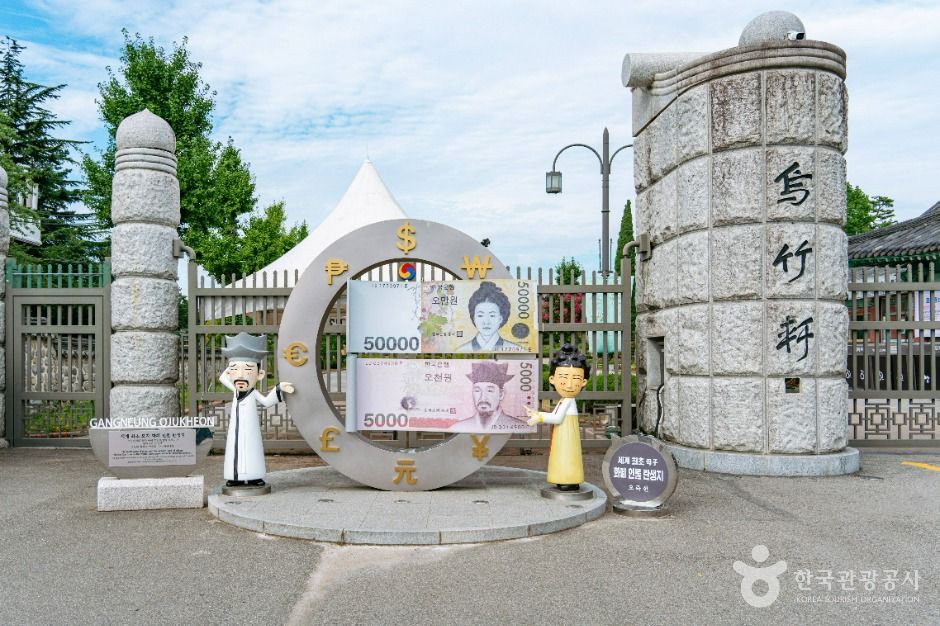
The first thing I noticed at Ojukheon (a historic Joseon-era residence linked to Korea’s most revered scholar family) was the stillness. Black bamboo flickered against the light, the wooden eaves held their shadows, and the air smelled faintly of earth and old pine. In a country where history is often folded into daily life, this place feels especially intimate, less like a monument and more like a house where brilliant minds had only just stepped out.
Walking through the grounds, I found myself slowing down without trying. This is where Sin Saimdang, the celebrated artist and cultural icon, and her son Yulgok Yi I, one of the Joseon dynasty’s great Confucian scholars, are remembered not as distant names from textbooks but as living presences. Inside the museum and memorial spaces, the mood deepens. Paintings, relics, and quiet courtyards give the visit an almost tactile quality, as if intellect here once had texture, grain, and scent.
Ojukheon and the Gangneung Municipal Museum form one of Gangneung's most important cultural stops, where early Joseon architecture stands beside deep local history. The site is best known for its link to Yulgok Yi I, who was born here, and for exhibition spaces that trace everything from regional folk life to prehistoric relics and Buddhist artifacts.
The grounds feel calm and deliberate, with old timber halls, memorial spaces, and open-air displays creating a rhythm that slows your steps. It is a place where scholarship, family legacy, and regional memory linger in the air.
Walk first through Ojukheon's historic compound, then continue into the museum galleries and outdoor exhibition area for a fuller sense of the Yeongdong region's daily life and material culture. Reservation for domestic visitors is available, and the annual memorial rite for Yulgok has been held here every year since 1962.
By the time I reached Jeonggami Village, the day had softened. Fields stretched out in patient rows, village roads curved past low houses, and the whole landscape carried the easy rhythm of rural Gangneung. This is the kind of place where travel stops feeling scheduled and starts feeling lived in.
The meal I had been waiting for was neungi-baeksuk, a chicken soup simmered with fragrant wild mushrooms. It arrived steaming, rich without being heavy, the broth carrying a deep woodland aroma that felt restorative after the lingering late-summer heat. Around me, the village seemed built on small, seasonal pleasures: persimmons, harvests, craft traditions, hands-on farm experiences. Even if you come only for lunch, you leave with a sharper sense of how Korean countryside culture ties food, labor, and hospitality together.
Jeonggami Village is a rural experience village in Gangneung, known for its sweet persimmons and its broad lineup of hands-on farm, craft, and food programs. Across four small villages, travelers can follow the rhythms of the seasons through planting, harvesting, persimmon picking, and workshops centered on dried persimmons.
The mood here is earthy and unhurried, with orchards, fields, and workshop spaces shaping a day that feels close to local rural life. It is the kind of place where late-summer heat softens into the smell of soil, fruit, and a slow country meal.
Focus on the seasonal experience programs, which range from spring planting to summer corn and potato harvests, then autumn persimmon picking, dried persimmon making, and sweet potato or peanut harvests. Facilities include a Korean beef dining hall, a dried persimmon processing and sales shop, a dried persimmon experience visitor center, and Jeonggami Neungi Baeksuk, a chicken soup restaurant with oak mushrooms.
Before sunrise at Jeongdongjin, the coast belongs to sound. Waves roll in first, then the shuffle of early visitors, then the low murmur of people facing the horizon as if waiting for a performance. Jeongdongjin is famous across Korea as one of the country’s great sunrise spots, and standing there in the half-dark, I understood why. The sea was a sheet of iron-blue, the air cool enough to wake every nerve in my skin.
Then the light changed all at once. A line of orange broke clean across the East Sea, and the sky began to open in layers, gold, coral, pale silver. For a few minutes nobody seemed interested in talking. The moment felt ceremonial without trying to be, shaped by geography, habit, and the Korean affection for greeting the first light of the day. I had come to escape the last drag of summer, but this was the instant that stayed with me: the feeling that morning here is not just seen, it is collectively awaited.
Jeongdongjin is a seaside stretch on the Gangneung coast, famous across Korea for one of the country's most celebrated sunrise views. Beyond the first light, travelers find a shoreline tied to royal rites, fishing boats slipping out through narrow rock gaps, and the drama-set scenery around Jeongdongjin Station, the station once known as the closest to the sea in the world.
The place feels cinematic at dawn, when the horizon burns open and the whole coast holds its breath for a few quiet minutes. Later, the mood shifts to salt air, train tracks, and the easy rhythm of a beach town built around the sea.
Come early for the sunrise, then continue on foot to Jeongdongjin Station and the nearby Sandglass Park for the classic rail-and-sea view. The site is pet-friendly, and seasonal local rites for a good catch are traditionally held twice a year on the first full moon and Dano.
As the sun climbed higher, Gangneung no longer felt like a stop on an itinerary. It felt coherent in a way many trips do not: scholarship rooted in place, village food shaped by season, a shoreline that turns dawn into ritual. Each stop had its own mood, but together they formed a day of unusual balance, reflective, grounded, and vividly sensory.
Long after leaving, what I remembered was not only the beauty but the texture of it all: timber worn smooth by time, broth rising in fragrant steam, the cold edge of sea air before sunrise. Gangneung has romance, certainly, but not the overblown kind. Its appeal is steadier than that. It lingers.
Gangneung stayed with me as a place of gentle contrasts: intellectual and rural, hushed and expansive, warm at the table and cool at the shore. It felt less like a quick getaway than a change in breathing.
Travel tips
Walk this story
Places in this story
3 places
Itinerary
1 day
Region
강원
Places you can import
3 places

Comments
See what other travelers are saying.
Sign in to leave a comment
You can sign in with Google, Kakao or Naver.