TRAVELER STORY · 경기
Written by AI from Korea Tourism Organization travel-course data. It is not a real visitor’s review, so check hours and travel times before you go.
A family escape into literature, open fields, and a sky full of stars just beyond the city.
In Yangpyeong, the countryside does not ask for your attention loudly; it wins you over with wet stone paths, pine-scented air, and a night sky deep enough to make a child fall silent.
The air changed first. Seoul's hard edges gave way to fields, low mountains, and the kind of quiet that feels almost physical, as if someone had lowered the volume of the world. I came to Yangpyeong looking for a day that felt slower and softer, a place where children could roam without hurry and adults could remember what unstructured wonder feels like.
What I found was a pocket of countryside that still holds the warmth of an older Korea: farm roads, wooded slopes, and broad skies that seem to stretch a little farther than they do in the city. For international travelers, this is one of the pleasures of Gyeonggi-do. It sits close to the capital, yet the mood shifts completely. The day began not with a checklist, but with relief.
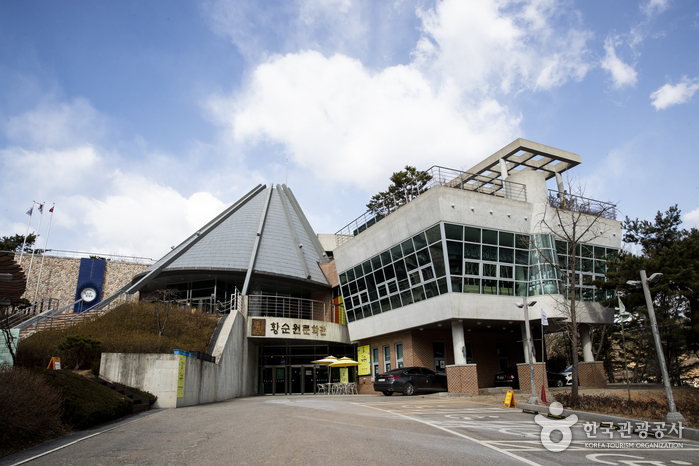
Hwang Sunwon Literature Village Sonagi Village is an outdoor literary park in Yangpyeong that turns Sonagi, Hwang Sunwon’s beloved coming-of-age story, into a walkable landscape. You move between the literary museum, stepping stones, wildflower paths, calf fields, and the Sonagi Plaza, where an artificial rain shower brings the novel’s most famous mood into physical form.
The place feels tender and quietly nostalgic, as if a schoolbook memory had opened into a real valley. Children can roam through fields and themed paths, while adults catch the soft ache of first love, summer rain, and a disappearing rural Korea.
Start at the Hwang Sunwon Literary Museum, then continue outside to the stepping stones, sorghum path, and Sonagi Plaza for the most immersive sequence. The 2021 Digital Sonagi Walk adds a more vivid, sensory layer to the visit, and pet companions are allowed, which makes the stop easier for families traveling together.
양평곤충박물관은 도심에서 보기 어려운 곤충 표본과 체험을 한자리에서 만나는 문화시설입니다. 국내외 희귀 곤충표본 1,500여 점이 전시되어 있고, 사슴벌레와 장수풍뎅이, 흙 속 애벌레를 가까이 살펴보는 체험실이 아이들의 발길을 붙잡습니다.
유리장 속 표본을 들여다보다가 체험실에서 살아 움직이는 곤충을 마주하면, 아이들의 질문이 금세 늘어납니다. 가을 양평의 바깥 공기와 이어지는 야외 체험장은 작은 생명들을 관찰하는 시간이 여행의 속도를 바꿔 줍니다.
상설·기획 전시실을 둘러본 뒤 곤충체험실, 포토존, 영상학습실 순서로 이동하면 아이들이 지루해할 틈이 적습니다. 곤충 스탬프 찍기와 곤충 배지 만들기, 야외 체험장의 나비 목걸이·장수풍뎅이 표본 만들기 등 체험 프로그램이 있으며 일부는 유료로 운영됩니다.
The sound of footsteps on stone and the smell of damp earth led me into Yangpyeong Hwang Sunwon Literature Village, Sonagi Maeul (a literary park inspired by the beloved Korean short story Sonagi, or Shower). Even before I entered the museum spaces, the setting felt like the threshold to a memory: open grounds, quiet corners, and the sense that literature here had been given a landscape instead of a shelf.
Hwang Sunwon remains one of Korea's most cherished writers, and Sonagi is woven deeply into the country's emotional imagination, a story of youth, innocence, and fleeting connection. That context matters, but the village never feels like a lecture. It feels lived-in. You move through exhibition rooms that introduce the author's life and work, then step outside to spaces that bring the story into the open air.
The moment that stayed with me most was the Sonagi Plaza, where artificial rain falls outdoors. Children ran toward it instinctively, laughing, while adults paused with the half-smile of people recognizing something they had not felt in years. Nearby, the stepping stones turned a simple walk into a small ritual. It was playful, yes, but also strangely moving. A place built around a story of purity had managed to make everyone a little more tender.
By evening, the light had thinned to silver and the hills around Jungmisan Observatory seemed to gather the last of the day into their folds. The road up felt like a quiet ascent into another world. There was no city glare here, no visual noise, only dark ridgelines and the cool mountain air that makes you pull your jacket closer.
Jungmisan Observatory is known for children's astronomy experiences, but the appeal reaches far beyond families. There is something universally disarming about standing under a clear sky and realizing how rarely you truly look up. The observatory's programs are reservation-based, and the exact schedule can vary, which only adds to the sense that this is less a drop-in attraction than a deliberate evening encounter with the night.
The most memorable moment of the trip came there, in the hush between explanations, when the sky seemed to open all at once. Even near the Seoul metropolitan area, this mountain remains one of the better places to see a dense scattering of stars because the surrounding area is relatively free of pollution and light. Children pointed. Adults whispered. For a few minutes, everybody spoke the same language: astonishment.
Jungmisan Observatory is an outdoor astronomy learning site in the hills of Yangpyeong, built for hands-on stargazing and science programs, especially for young children and families. About an hour from the Seoul metro area, it stands in a darker patch of mountain air where the sky opens wide and the stars show up in surprising numbers.
Night settles differently here: the mountain goes quiet, headlights disappear, and the sky becomes the main event. It feels less like a formal attraction and more like a family pause under a deep, unhurried ceiling of stars.
Come for the evening program, then let the sky do the rest; this is the kind of stop that works best when children can look up, ask questions, and stay curious. Parking and restrooms are available, and the observatory is known for astronomy experience programs designed for children.
On the way back, the countryside had turned almost completely dark, and the day's images replayed with unusual clarity: rain falling in a literary plaza, stepping stones underfoot, mountain air on my face, a sky thick with stars. It felt less like a day trip and more like a gentle return to something easily lost in modern travel, the pleasure of being fully present.
What makes this corner of Yangpyeong memorable is not spectacle. It is the way each stop deepens the next. Literature sharpens your sense of feeling. Nature softens you. The observatory lifts your gaze outward. If you are traveling with children, they will carry away the thrill of rain, space, and open ground. If you are not, you may leave with something quieter and harder to name: the sensation of having briefly stepped back into innocence.
This was the kind of journey that lingers long after the road home, gentle in pace but unexpectedly deep in feeling. Yangpyeong left me with the rare conviction that wonder does not have to be grand to be unforgettable.
Travel tips
Walk this story
Places in this story
3 places
Itinerary
1 day
Region
경기
Places you can import
3 places

Comments
See what other travelers are saying.
Sign in to leave a comment
You can sign in with Google, Kakao or Naver.