TRAVELER STORY · 경북
Written by AI from Korea Tourism Organization travel-course data. It is not a real visitor’s review, so check hours and travel times before you go.
A slow, soul-soothing route through market lanes, riverside villages, and temples that quiet the mind.
I came to Yeongju for a break, and left feeling as if I had stepped out of the clock entirely.
The first thing I noticed was the wood. Husaeng Market does not demand attention; it releases it slowly through hanok-style storefronts, weathered beams, and the low murmur of people wandering without hurry. After the speed of everyday life, it felt like someone had turned the volume down on the world.
I drifted past the former Sobaek Yeogwan, now reborn as a guesthouse, and the modern history experience center that folds Yeongju's recent past into the present. A traveler center, a puppet theater, even a laundry room give the market an unexpectedly lived-in rhythm. It was less a stop on a sightseeing list than a reminder that memory can still be useful.
Husaeng Market is an open-air shopping district in downtown Yeongju, Gyeongsangbuk-do, where a 2014 urban regeneration project brought back the look of an older market street. Its cluster of wooden hanok-style shop buildings gives the area a rare retro character, while the former Sobaek Inn, now a guesthouse, and the Modern History Experience Hall add a deeper sense of the city's recent past.
The market feels like a film set made for slow wandering, with weathered wood, old storefront lines, and the easy rhythm of daily life still moving through the lanes. It is nostalgic without feeling staged, warm rather than polished.
Walk the outdoor market first to take in the restored hanok-style arcade, then look for the converted Sobaek Inn guesthouse and the Modern History Experience Hall for context on Yeongju's modern story. The traveler center, Red Puppet Theater, and even the laundromat make this stop feel less like a single attraction and more like a living neighborhood pause.
The river air in Museom Village felt cool and clean, and the traditional houses stood with the quiet confidence that only long years can give. More than forty old homes gather here, many from the late Joseon period, and the whole village carries the soft weight of time without ever feeling frozen.
Then I reached the narrow log bridge, the village's most famous line across the water, and everything sharpened. I could picture the years when it was the only way in and out, which makes every crossing feel both ordinary and historic. If you are traveling with a dog, bring a leash; this is one of those rare places where the whole village welcomes pets without fuss.
Museom Village is a traditional riverside settlement in Yeongju, named for an island-like patch of land surrounded by water. Around 40 old houses cluster here, including more than 30 late Joseon-era scholar-gentry homes, and the village’s most striking symbol is the narrow wooden plank bridge that once served as its only link to the outside world.
The village feels hushed and unhurried, with tiled roofs, packed-earth lanes, and river air giving the whole place a lived-in sense of history. It is the kind of place that invites a slow walk rather than a checklist.
Start with the wooden bridge, then wander through the old hanok houses and village lanes to catch the textures of a preserved rural landscape. Look out for traditional hanok stay programs and hands-on cultural experiences such as ceramics, dyeing, and Four Gentlemen painting, and note that pet companions are allowed.
Wind, water, and the gentle sway of a suspension bridge made Yeongjuho Yongmaru Park feel alive under my feet. I started at the visitor's house and lookout, then followed the trails past small cafés where the lake flashed silver between the trees.
Crossing Yongdu Bridge and Yongmi Bridge, I felt the park open into two moods: one side for lingering, the other for wandering onward. On the far side, Pyeongeun Station appeared like a memory, and the nearby water museum gave the whole area a subtle sense of purpose. This is not a place to rush. It asks you to slow down and look twice.
Yeongjuho Yongmaru Park unfolds along the lakeside in Pyeongeun-myeon, Yeongju, with two distinct park zones linked by a walking route and suspension bridges. In Yongmaru Park 1, you can stop by the visitor center, observatory, and cafeteria before crossing Yongdugyo and Yongmigyo to reach Yongmaru Park 2. The second area adds a historical note with Pyeongeun Station History, while the nearby Yeongju Dam Water Culture Center broadens the outing.
The park feels airy and restorative, with water, open sky, and the slight thrill of crossing swaying bridges. It suits a slow, reflective walk more than a rushed checklist stop.
Follow the path from Yongmaru Park 1 to Yongmaru Park 2 so the suspension bridges become the highlight of the walk, then finish at Pyeongeun Station History for a quieter historical pause. The park is open year-round, making it an easy scenic stop for a healing-themed Yeongju itinerary.
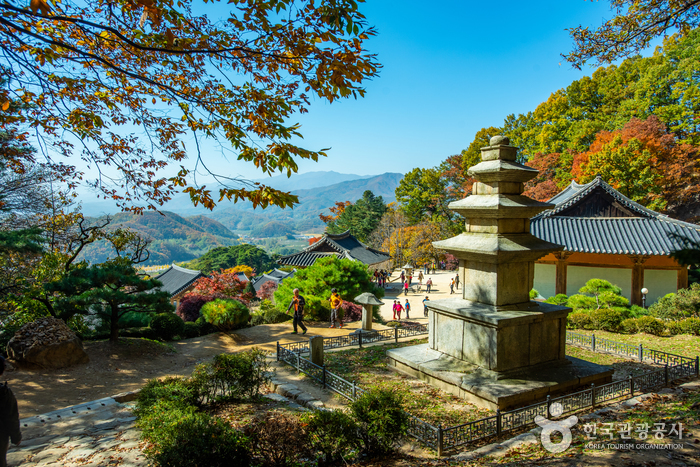
Buseoksa Temple, a UNESCO World Heritage site in Yeongju, is one of Korea's great mountain temples and the birthplace of the Hwaeom school of Buddhist thought. Walk its grounds and you pass stone lanterns, pagodas, and the celebrated Muryangsujeon Hall, one of the oldest wooden buildings in the country, all framed by quiet ridgelines and long views.
The temple feels spacious and still, with old timber, weathered stone, and mountain air shaping the mood. It is the kind of place that slows your pace without asking.
Follow the uphill approach slowly so the historic halls and stone relics reveal themselves in sequence, then linger around Muryangsujeon Hall and the floating-stone legend that gave Buseoksa its name. The site is open year-round, and the outdoor setting makes it an easy heritage stop with parking and restrooms on hand.
Sosu Seowon, a historic Confucian academy in Yeongju, carries the weight of Joseon scholarship with unusual grace. Founded as Baegundong Seowon in 1543 and officially recognized as Sosu Seowon in 1550, it unfolds through lecture halls, study quarters, and shrines set in an early, less rigid academy layout. Walk through the main gate and you move straight into the intellectual heart of the site, where Myeongnyundang Hall and the adjoining dormitory buildings still suggest a life shaped by study and ritual.
The grounds feel hushed and deliberate, with old timber, open courtyards, and mountain air softening every step. It is the kind of place that slows your breathing and makes silence feel like part of the architecture.
Enter through the front gate and follow the natural flow from Myeongnyundang Hall to Ilsinjae and Jikbangjae to understand how students once lived and learned here. Parking and toilets are available, and the mostly outdoor setting makes this a strong stop for a reflective walk through Yeongju's heritage landscape.
The mountain air at Seonbichon and Sosuseowon felt cleaner, cooler, almost ceremonial. At Seonbichon, the reconstructed traditional village made scholarship feel physical again: courtyards, timber frames, and rooms arranged for a life shaped by study, discipline, and conversation.
A few steps away, Buseoksa, a Silla-era temple and UNESCO World Heritage site, held the deepest stillness of the day. The legend of the floating stone made sense the moment I stood there; the place seems lifted not by magic, but by the weight of belief and centuries of devotion. I left feeling that Yeongju does not ask you to escape time. It teaches you how to sit inside it.
Seonbichon is an open-air heritage village beside Sosuseowon, created to recreate the study world and daily life of Korea's Confucian scholars. Traditional houses, quiet courtyards, and hands-on cultural settings turn the site into more than a backdrop; it feels like a lived-in lesson in older ways of thinking and living.
The mood is calm and reflective, with wooden buildings, open skies, and the unhurried rhythm of a historic village. It is the kind of place that invites you to slow your steps and let the silence do some of the storytelling.
Walk Seonbichon together with nearby Sosuseowon for the fullest sense of Yeongju's scholarly heritage. Because it is an outdoor lodging-style heritage space, give yourself time to move slowly through the village and notice the recreated study halls and traditional living quarters.
Yeongju left me with a rare kind of quiet, the kind that feels full rather than empty. I arrived looking for a pause and found a place that turns slowness into a kind of strength.
Travel tips
Walk this story
Places in this story
6 places
Itinerary
1 day
Region
경북
Places you can import
6 places

Comments
See what other travelers are saying.
Sign in to leave a comment
You can sign in with Google, Kakao or Naver.