TRAVELER STORY · 인천
Written by AI from Korea Tourism Organization travel-course data. It is not a real visitor’s review, so check hours and travel times before you go.
From a century-old makgeolli brewery to a quietly powerful church and a historic temple, this is the kind of day trip that makes Seoul feel far away.
By the time the city noise fell away, Ganghwa Island had already given me something rarer than a checklist of sights: a day that tasted of rice, stone, and old faith.
I left Seoul chasing quieter air, and Ganghwa Island delivered it almost immediately. The pace softened first, then the soundscape changed: fewer engines, more wind, more space between moments. By the time I reached Gumpung Brewery, the trip already felt like a reset.
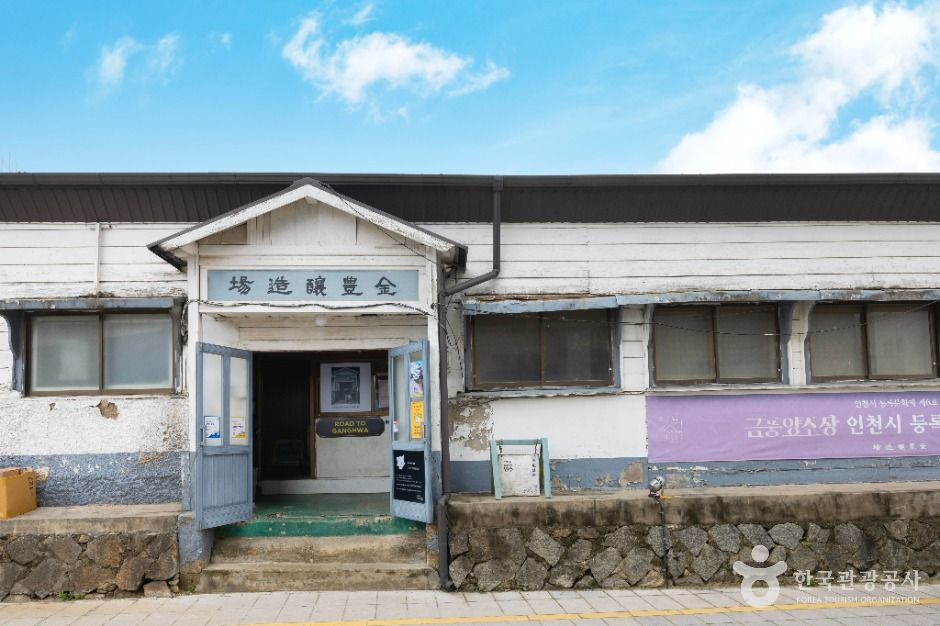
The brewery carries the calm confidence of a place that knows exactly what it is. Its makgeolli, brewed from premium eco-friendly rice, is rooted in more than a century of local tradition, yet the presentation feels unexpectedly contemporary. The recycled rice-sack packaging caught my eye right away. It turned a humble ingredient into part of the story, and that story felt very Ganghwa: practical, inventive, and quietly proud.
Geumpung Brewery is a living piece of Ganghwa’s traditional liquor heritage, where a century of makgeolli culture meets a more modern, carefully managed production process. Made with eco-friendly rice from Ganghwa, it stands out for its upgraded packaging too, including rice-sack upcycling that gives the brand an unexpectedly fresh edge.
The site feels open and grounded, with the smell of grain, fermenting rice, and outdoor air blending into a quietly distinctive rural stop. It is the kind of place where the pace slows as soon as you step into the tasting area.
Look for the production room, tasting hall, second-floor exhibition space, and outdoor tasting area, which together make the visit more than a quick stop. It is also known as a filming location for Sing Together and Mash Bill, and it can be folded neatly into a Ganghwa day trip alongside nearby historic sites.
Daehan Seonggonghoe Ganghwa Cathedral is a striking historic Anglican site built in 1900 and still preserved in its original form. Its compact, two-story structure blends Korean traditional architecture with a basilica-inspired layout, making it one of the most distinctive stops on a Ganghwa day trip.
The setting feels quiet and measured, with the kind of stillness that invites slower steps and longer glances. Its wooden lines and restrained presence give the whole place a calm, timeworn dignity.
Look closely at the building's ship-like plan, which was designed to suggest an ark, and notice how the Korean exterior and Western interior logic are folded together. It is a nationally designated historic site, so the value here is not spectacle but the rare survival of an early modern sacred space in place.
Jeondeungsa Temple is one of Korea’s oldest surviving Buddhist temples, set within the ancient walls of Samrangseong on Ganghwa Island. Its grounds hold major cultural treasures, including Daeungjeon Hall, Yaksajeon Hall, the Buddhist bell, and Jeongjoksaggo, the royal archive that once stored the Annals of the Joseon Dynasty.
The temple feels weathered and deliberate, with stone walls, old wooden halls, and a calm that settles in slowly as you walk deeper inside. It carries both spiritual weight and a strong sense of national history, as if the hillside itself has been guarding stories for centuries.
Follow the path through the temple precincts to see the major treasure halls and the memorial stele for General Yang Heon-su near the east gate. If your timing allows, the temple stay program offers day, experience, and rest options, and pets are allowed in the outdoor area.
A little later, the stillness deepened at Ganghwa Anglican Church, where the air seemed to hold itself differently. The building stands with a grace that is neither purely Western nor strictly Korean. It borrows from both, and that balance gives it a rare emotional clarity. Nothing here feels forced. The lines are simple, the atmosphere reverent, and the history sits close to the surface.
I found myself looking longer at the structure than I expected to. The church was consecrated in 1900, but it does not feel trapped in the past. It feels preserved, lived with, and respected. If the brewery had introduced me to Ganghwa through taste and ingenuity, the church introduced the island through stillness and form.
The day’s most lasting impression came at Jeondeungsa Temple, where the scent of old wood and incense seemed to gather under the trees. As one of Korea’s oldest surviving temples, it carries a weight that you feel before you fully understand it. The grounds are expansive enough to let your thoughts wander, yet enclosed enough to make every step feel deliberate.
I wandered slowly, taking in the layered history of the temple and the ancient earthwork of Samrangseong nearby, where legend and record blur into one another. That blend of myth, defense, and devotion gives this part of Ganghwa a particular charge. It is not just beautiful. It feels inhabited by memory. And that is what stayed with me long after I left.
Ganghwa Island did not overwhelm me; it settled over me. I came for a day trip, but I left with the feeling that I had spent time inside a quieter version of Korea, where taste, faith, and history still move at human speed.
Travel tips
Walk this story
Places in this story
3 places
Itinerary
1 day
Region
인천
Places you can import
3 places

Comments
See what other travelers are saying.
Sign in to leave a comment
You can sign in with Google, Kakao or Naver.