TRAVELER STORY · 충남
Written by AI from Korea Tourism Organization travel-course data. It is not a real visitor’s review, so check hours and travel times before you go.
A walking journey through Taean’s dunes, arboretum gardens, and the quiet endurance of the west coast.
The wind here does not merely blow; it sculpts, softens, and remembers.
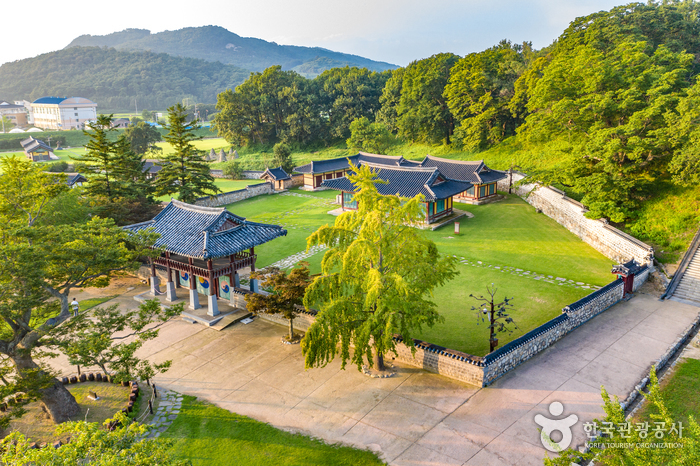
I began this journey with the slow, sandy rhythm of Haemieupseong Fortress in mind. The stone wall carries the weight of centuries, but it does not feel severe. It feels open. You can almost sense the old coastal frontier in the air, where protection and daily life once had to share the same horizon.
Walking there, I kept thinking about how the west coast has always asked for patience. The fortification stands with a weathered calm, as if it has learned to endure salt, wind, and time without losing its shape. It was the kind of place that made the rest of the trip feel less like sightseeing and more like following a line drawn by history itself.
서산 해미읍성은 조선 성종 때인 1491년에 축조된 평지 읍성으로, 둘레 약 1.8㎞의 석성과 동문·남문·서문이 남아 있는 역사 유적입니다. 성 안으로 들어서면 방어를 위해 쌓은 성곽의 윤곽과 넓은 잔디 공간, 감옥터와 회화나무처럼 아픈 역사를 품은 흔적을 함께 마주하게 됩니다.
돌로 쌓은 성벽 옆을 걷다 보면 발밑의 흙길과 오래된 나무 그늘이 조선 시대의 시간감을 가까이 끌어옵니다. 넓게 트인 성내 풍경 덕분에 답답함보다 차분한 산책의 리듬이 먼저 느껴집니다.
남문을 지나 성 안으로 들어간 뒤 성곽을 따라 한 바퀴 걸어보면 평지 읍성의 구조와 방어 체계를 눈으로 따라가기 좋습니다. 유모차 이용 가능, 무장애 관광 시설이 갖춰져 있으며 장애인주차, 접근로, 출입구, 장애인화장실, 유모차 관련 편의가 마련되어 있습니다.
Taean Sinduri Coastal Dune is Korea's largest coastal dune system, shaped over thousands of years by strong northwest seasonal winds. This rare landscape links beach, grassland, wetland, and woodland in one protected stretch, making it one of Taean's most distinctive ecological sights.
The air feels open and wind-swept, with sand, grass, and sea all sharing the same frame. It is a place where the coastline seems to breathe slowly, even on a busy day.
Walk the dune trails to see how the landscape shifts from sandy ridges to dune grassland and wetland zones. It is a representative slow-city nature spot and a strong choice for visitors interested in coastal ecology and walking travel; the area described here is outdoors and best appreciated on foot.
The first rush came at Taean Sinduri Coastal Sand Dunes, where the landscape opened like a pale, breathing sea of grainy hills. The wind was the loudest thing there, brushing over the surface and lifting fine sand into brief, shimmering streams. Nothing felt fixed. Even the ground seemed to be in motion.
Knowing that these dunes were formed over thousands of years made every step feel strangely intimate. This is not a dramatic cliff or a polished viewpoint. It is a living buffer between land and ocean, a place that absorbs force and slows it down. I walked without hurrying, letting the silence settle around me until the dunes no longer felt empty, only elemental.
By the time I reached Cheollipo Arboretum, the air had changed. The sharpness of the coast gave way to leaves, shade, and the clean green scent of damp earth. Paths curved gently through carefully tended collections of trees and flowers, each section feeling like a small world with its own climate and temperament.
What stayed with me most was the quiet sense of devotion. This arboretum was not made for spectacle. It was built through years of patient collecting and care, and you can feel that in the way the garden moves from one plant community to another. It is the sort of place where you slow down without being told to, where every bend in the path invites another breath.
Cheollipo Arboretum unfolds as South Korea's first private arboretum, a garden shaped since 1962 by Dr. Min Byung-gal with rare depth and patience. Split into seven zones, it moves from Miller Garden to conifer collections and magnolia-rich corners, creating a landscape where every turn feels carefully composed rather than casually planted.
The air feels hushed and green, with the kind of quiet that makes footsteps soften on their own. It is a place for slow looking, where sea light, layered foliage, and seasonal blooms give the walk a calm, observant rhythm.
Follow the different zones in a loose loop and notice how each area changes with the plants it holds, from magnolias and camellias to hollies and maples. Korean guided tours run in summer from Mar through Nov, 09:00-11:00 and 14:00-17:00; winter guidance is listed for Dec-Feb but details are not provided, so check on site or by phone. Reservations for Korean visitors are required through the website or by phone.
Later, walking along Taean’s seaside paths, I understood the trip as a whole. Fortress wall, dune, garden, shoreline. Each place held a different way of meeting the same coast: one through defense, one through endurance, one through cultivation, one through movement. Together they made the region feel deeply human.
I left with the taste of salt still lingering on my lips and the sense that this west coast is best understood on foot. Driving passes over it too quickly. Walking lets it speak. And here, the landscape has a lot to say.
This trip lingered in me like wind caught in fabric: light at first, then impossible to forget. Taean revealed itself not as a single destination, but as a sequence of quiet revelations shaped by coast, care, and time.
Travel tips
Walk this story
Places in this story
3 places
Itinerary
1 day
Region
충남
Places you can import
3 places

Comments
See what other travelers are saying.
Sign in to leave a comment
You can sign in with Google, Kakao or Naver.