TRAVELER STORY · 강원
Written by AI from Korea Tourism Organization travel-course data. It is not a real visitor’s review, so check hours and travel times before you go.
I came for late-autumn healing, and left with the strange, quiet feeling that this borderland had reset my sense of time.
Cheorwon felt like two trips at once: one into warm mineral steam and family-friendly calm, the other into a silence broken by history.
The air in Cheorwon carried that sharp late-autumn bite that makes every warm place feel like a reward. I arrived with the loose intention of slowing down, drawn by the hot spring festival held each year around Gosokjeong National Tourist Site and the Hantan River Spa Hotel area, and the whole region seemed to lean into that promise of rest.
At Gosokjeong National Tourist Site, the mood changed immediately. Families were scattered across the open grounds, dogs trotting beside their owners, and the landscape opened wide enough to let everyone breathe a little deeper. The site is one of Cheorwon’s most famous scenic spots, and it has the easy generosity of a place built for lingering rather than rushing.
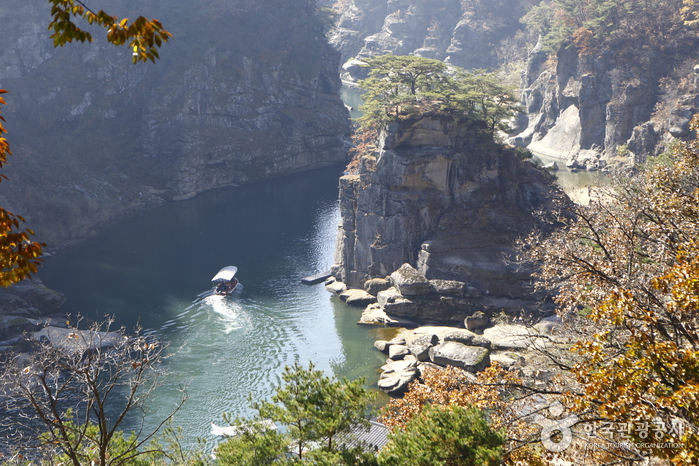
Goseokjeong National Tourist Site is one of Cheorwon's signature scenic stops, where a towering rock formation rises from the middle of the Hantangang River and clear water curls around its base. The wide open landscape blends sheer cliffs, a restored pavilion, and traces of local history into one memorable riverside view. It also works well as a starting point for nearby security-themed tour routes that link major wartime and peace landmarks in the area.
The mood is spacious, windswept, and quietly dramatic, with the river softening the hard edges of the basalt cliffs. It feels like a place where nature and memory sit side by side.
Walk the riverfront first to take in the central rock pillar and the pavilion view, then continue to the lawn, sports field, and the on-site attractions such as Goseokjeong Land, the Iron Triangle War Memorial Hall, the abandoned aircraft display, and boat facilities. Late autumn sometimes brings a hot-spring-themed festival to the wider Cheorwon area, so check local schedules if you want to pair the visit with seasonal events.
Cheorwon Labor Party Building is a stark three-story ruin from 1946, its blackened walls still carrying the scars of war. Set in open air in Cheorwon, it has become one of the county’s most visited security-tourism landmarks, where history feels immediate rather than distant.
The mood is somber and powerful, with silence broken only by wind and footsteps. It feels less like a sightseeing stop and more like standing inside a wound that time has chosen to preserve.
Look closely at the burn marks, shell damage, and bullet holes that cover the exterior; they are the site’s most unforgettable details. The building is open year-round, with parking and toilets available, and pets are allowed. It has also been used as a music video and concert location, which adds a striking cultural layer to its wartime history.
The Hantan River flashed in the cold light like polished glass, threading itself between dramatic cliffs and the famous rock formation of Gosokjeong. The sound was gentle but persistent: water moving, shoes brushing gravel, voices dropping instinctively to match the landscape’s calm. It was the kind of scene that asks you to slow your stride without ever saying so out loud.
What stayed with me most was the contrast. The tourist site feels welcoming and open, with camping facilities, caravans, and an ecological pond that make it especially easy for families to turn a day trip into a longer stay. Yet the river and rock formations also give the place a grandeur that feels almost severe. That tension between comfort and raw nature is exactly what makes Gosokjeong linger in memory.
The Labor Party Building stood in a completely different register. The first thing I noticed was not scale but damage: darkened walls, pockmarks, and the blunt honesty of a structure that still carries the marks of the Korean War. The silence around it felt heavier than at the river, as if everyone understood that this was not a place to chat lightly.
And yet the building is not frozen in grief. It has been given a second life as a cultural site, used for music videos and concerts, which makes its atmosphere even more haunting. Standing there, I felt the odd power of a place that refuses to be reduced to a ruin. It remembers the war, but it also holds on to art, performance, and the stubborn possibility of renewal.
By evening, Cheorwon no longer felt like a destination I had visited. It felt like a balance I had borrowed. One part of the trip was all steam, family time, and easy relaxation; the other was history made visible, impossible to ignore, and strangely beautiful because of it.
That combination gave the journey its afterglow. Cheorwon does not let you choose between healing and remembrance. It offers both, side by side, and asks you to carry them home together.
Cheorwon left me with the rare kind of calm that comes from being deeply moved, not just comforted. I came looking for a healing escape, and found a place where the landscape, the water, and the scars of history all spoke in the same quiet voice.
Travel tips
Walk this story
Places in this story
2 places
Itinerary
1 day
Region
강원
Places you can import
2 places

Comments
See what other travelers are saying.
Sign in to leave a comment
You can sign in with Google, Kakao or Naver.